

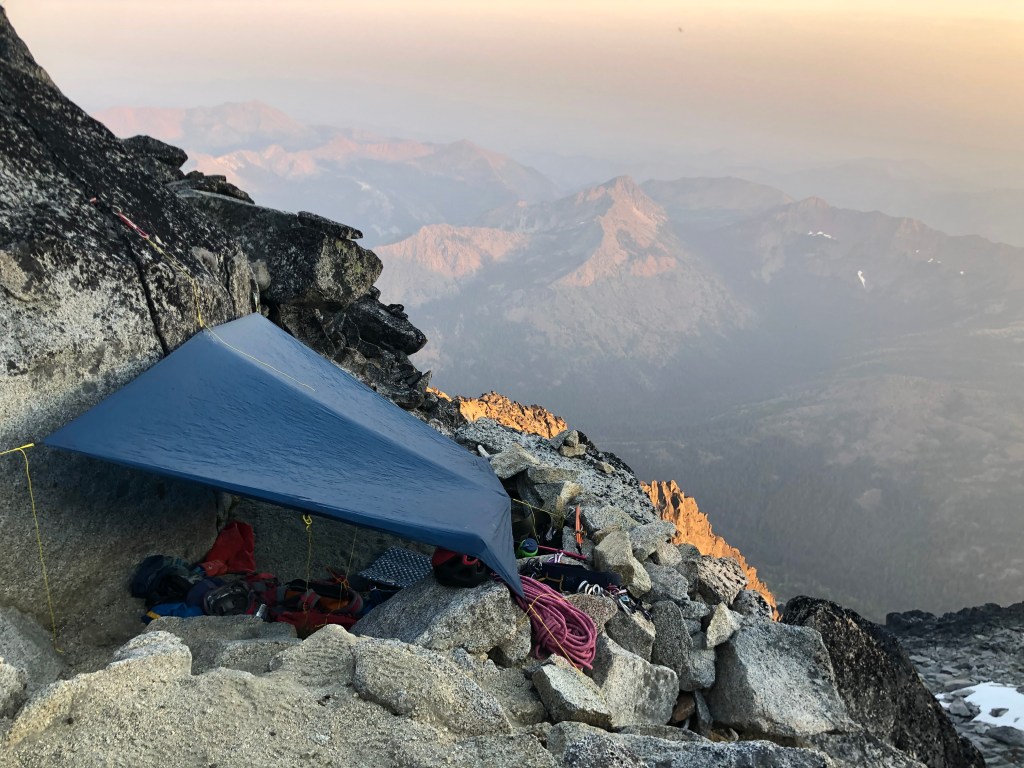
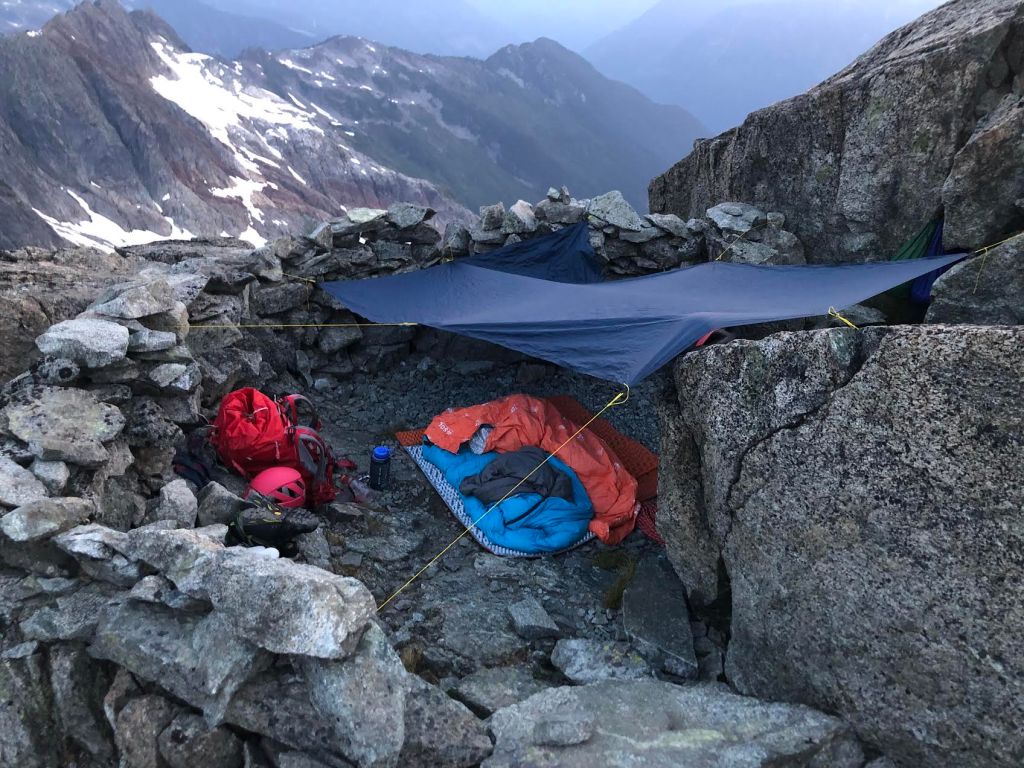
A simple flat tarp is an amazingly versatile shelter above and below the treeline. A decent silnylon or silpoly tarp is very lightweight and can provide a solid shelter. Setting up a tarp shelter takes creativity and a bit of practice. The standard a-frame using trekking poles or trees is fairly straight forward, but these are two things you rarely have in the alpine. Ice axes, rocks, cams/nuts, helmets, can all be used to prop up your tarp.
Compared to Other Emergency Shelters
I think your emergency shelter should best serve your worst case weather. Especially in the coast mountains that is often sleet/cold rain. A tarp will keep you dry for extended periods much more effectively than the emergency mylar bivies that most people carry. Bothy bags are another interesting option, but are far less versatile as they are difficult to sleep in. For planned bivies I find the combo of the SOL breathable emergency bivy (branded as escape or escape lite) with a tarp is a solid combo and comes in at under a pound for both.
Tarp Options
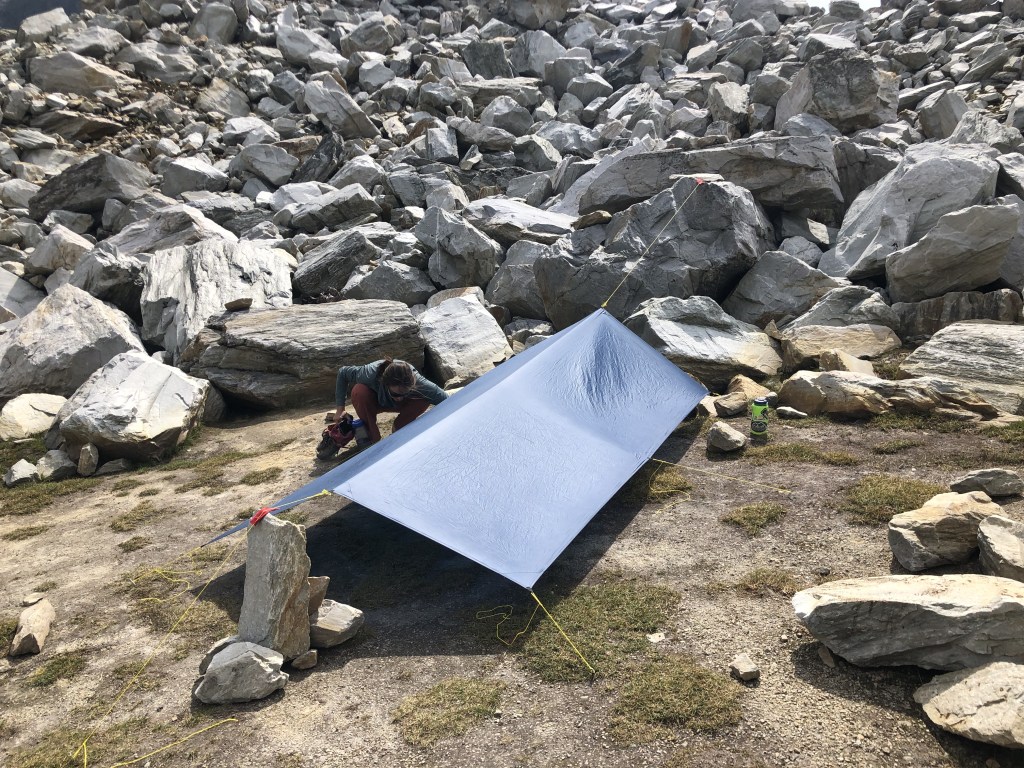
I sewed my own 6’x9′ tarp out of 20d silpoly. You can buy extra wide fabric (Hoffman Outdoor Gear is great in Canada) so you simply need to sew a hem and guyout points. This is a straightforward project, but if you don’t have a sewing machine there are many similar ones commercially available like the Rab Siltarp 1 and Borah Gear Solo Tarp.
Size: For sizing I think 6’x’9 is reasonable as a primary shelter for one, or emergency shelter for two. If you plan on regularly having two people underneath, a bigger size would serve you well. Doing a square tarp like 9’x9′ also allows some more creative tarp pitches.
Fabric: I think 20-30d silpoly or silnylon ticks all the boxes as a great tarp material. It is lightweight, reasonably durable, and very waterproof. You can save a bit more weight going to DCF/Cuben fabrics but it will cost about 5x the price and be less packable.
Guylines: I like 1.75mm Zing it for a guyline material. This UHMWPE cord is amazingly strong for the weight. The downside is that it challenging to use knots with it. I have my guylines setup with schwabisch hitches so I do not need to tie any new knots to rig my tarp (I will make a separate post detailing this). 2.5-3mm nylon cord is much easier to work with at the cost of a bit of weight. The nylon cord is also compatible with line locs which make tarp rigging very fast and convenient.
 Sandro Summits
Leave a comment