
Almost all climbers and mountaineers carry a prusik cord with them in the mountains primarily as a rappel backup and for self rescue situations. By changing a few key things and learning a few new hitches, this cord can become a far more versatile tool.
Hitch Cord
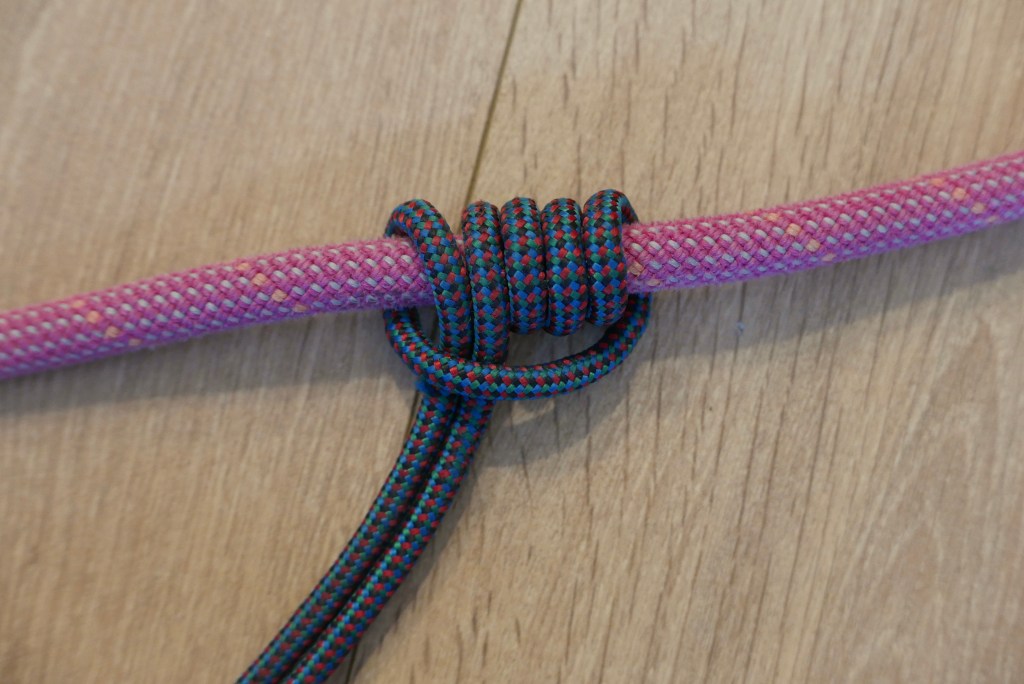
I prefer to use technora core accessory cord for my friction hitches. Currently I am using maxim 5.5mm tech cord for my friction hitch (I have also used sterling 5.9mm tech cord and they are about the same).This has a couple advantages over using nylon accessory cord. First it is much stronger than nylon cord. This allows you to use skinnier 5-6mm cords which are great for compatibility with half ropes and glacier cords without sacrificing strength. The other big advantage is that technora is extremely resistant to heat and won’t melt through with high loads/dynamic falls. If your friction hitch is only a rappel backup then the strength and even the added heat resistance is fairly non-consequential, but once you extend its use into self rescue systems it can become a much more versatile tool. The only real disadvantages of tech cord are the stiffness and price. I find despite the increases stiffness they still hold friction hitches well and they get a little more supple with use.
Hitch Cord Configuration
Most climbers tie their prusik cord in a loop with a double fishermans. This works great for rappelling, but limits the number of friction hitches you can tie. Tying your cord in an eye to eye configuration opens up the possibility of many more friction hitches.
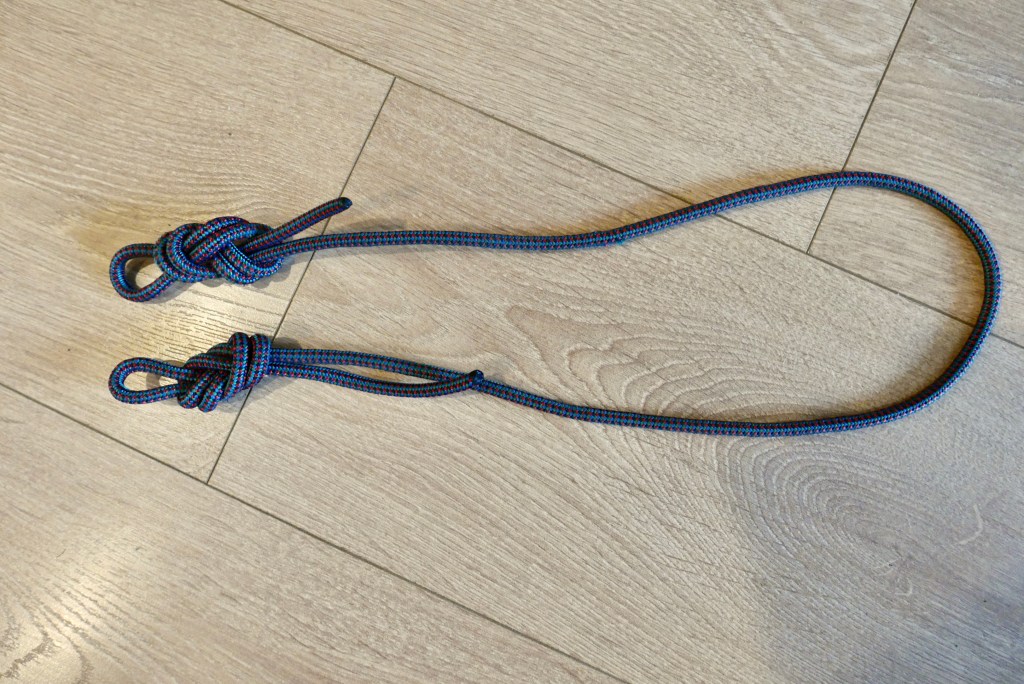
In the arborist community it is common to self tie eye to eye hitch cords using a poachers knot. This makes a very secure and compact knot that stays out of the way of hitches. The disadvantage here is that the poachers knot will cinch tightly onto the carabiner making it fiddly to take on and off. To avoid this you can tie your hitch cord with fixed eye in the form of an overhand or figure-8 on a bight. The overhand has more of a tendency to work itself loose on the stiff cords, but takes less cord and is less bulky.
If you want a presewn cord the bluewater VT prusik seems like a great option. It is made of technora and very heat resistant, however one downside is that the thinnest diameter is 7mm. I have no experience on whether this still grabs well on skinny twin ropes and glacier ropes, it is recommended for ropes 8-9.5mm. There are other premade eye to eye cords available, but these are generally aimed at the rescue/arborist market and designed for use with thick static ropes.
Schwabisch Hitch
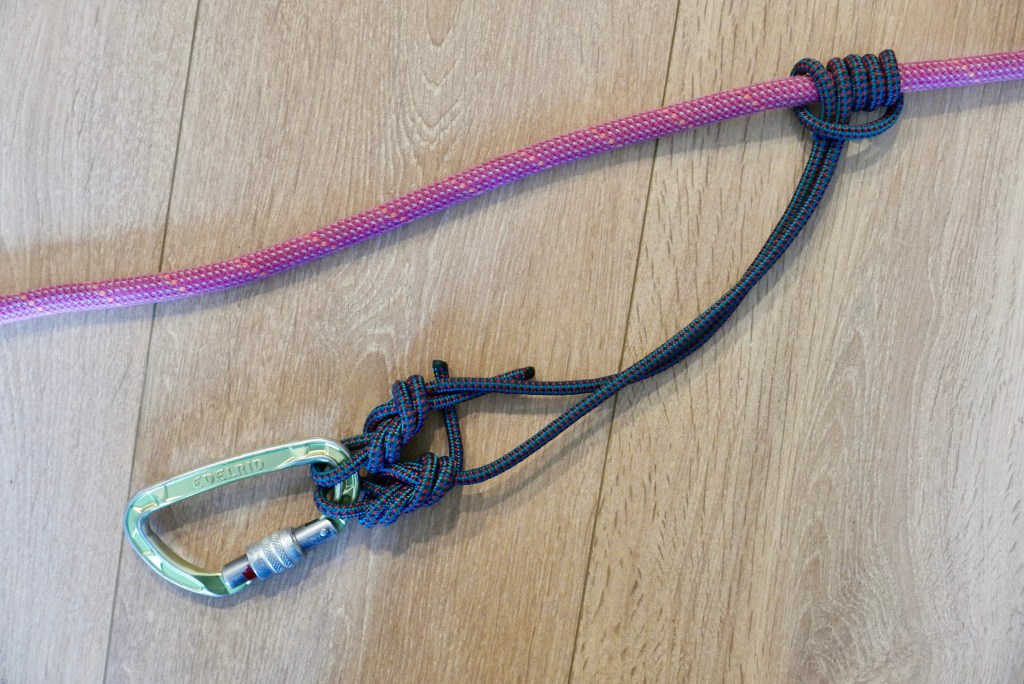
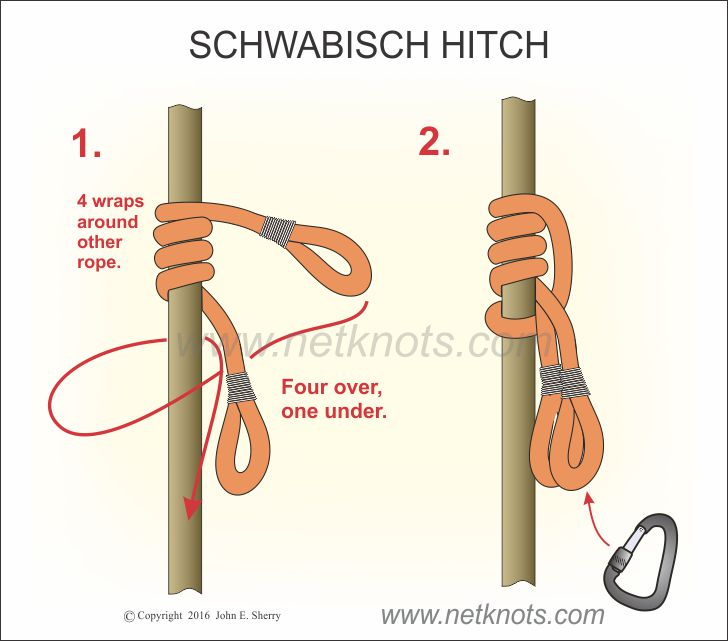
The Schwabisch Hitch is essentially a directional prusik. I use this for ascending ropes, with PMP’s (prusik minding pulleys), and as a tractor. It slides better in one direction but still grabs very firmly in the other. It binds up much less than a prusik making ascending ropes less work than with a prusik. Make sure that the extra wraps on the hitch are pointed towards your load otherwise it will work very poorly. It has the added benefit of releasing under loads quite well, which can make for easy load transfers.
To adjust the grabbing power of the hitch you can add more or less wraps to the top.
Valdotain Tresse (VT Hitch)
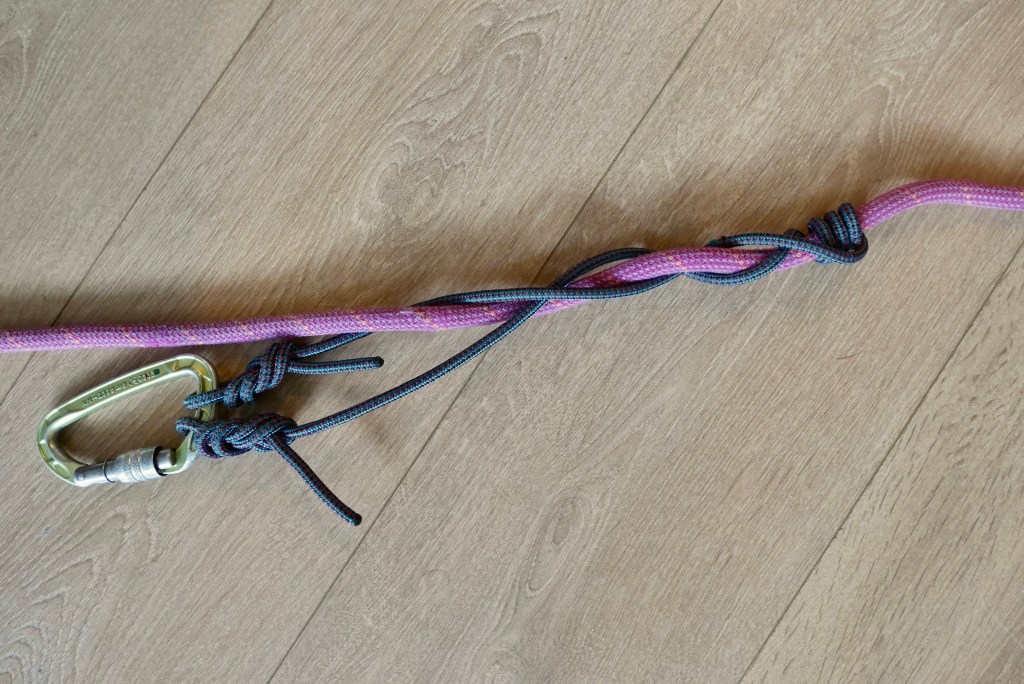
The Valdotain Tresse (VT) is a load releasable hitch, making it very useful on loaded ropes. With this you can do load transfers very easily, lower, and even rappel loaded ropes. It releases in a much more controlled manner than the schwabisch hitch. A heat resistant aramid hitch cord is strongly recommended if you will be releasing it under load.
To adjust the hitch you can either add more wraps at the top, or more crosses below. The grabbing power is also affected by the length of your hitch cord.
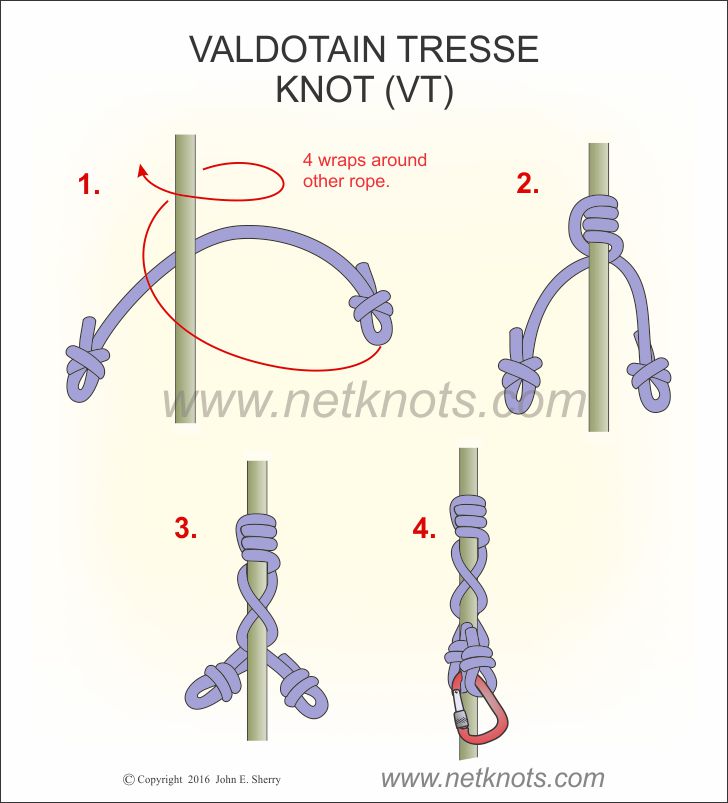
Modified Prusik Hitch
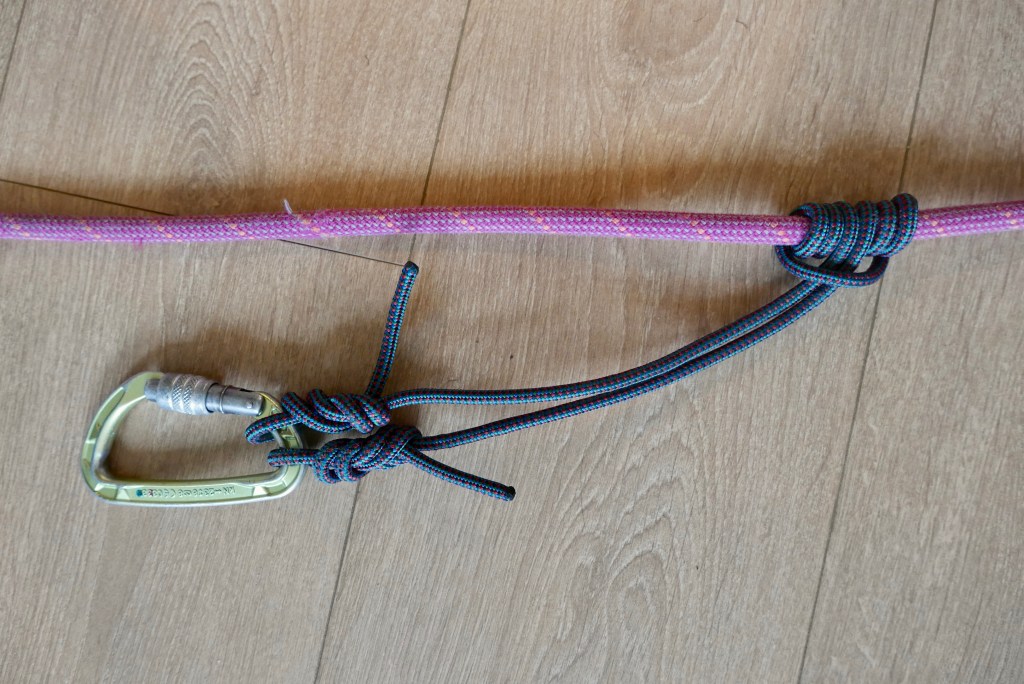
The Modified Prusik Hitch is the best choice if you will load the hitch in both directions. You can still tie a prusik hitch with the eye to eye prusik, and there is no fisherman’s bend to get caught up in the hitch. It grabs very reliably pulling in either direction.
You can adjust the friction with more or less wraps. Shown is the most common 3-wrap prusik.
Modified Autoblock
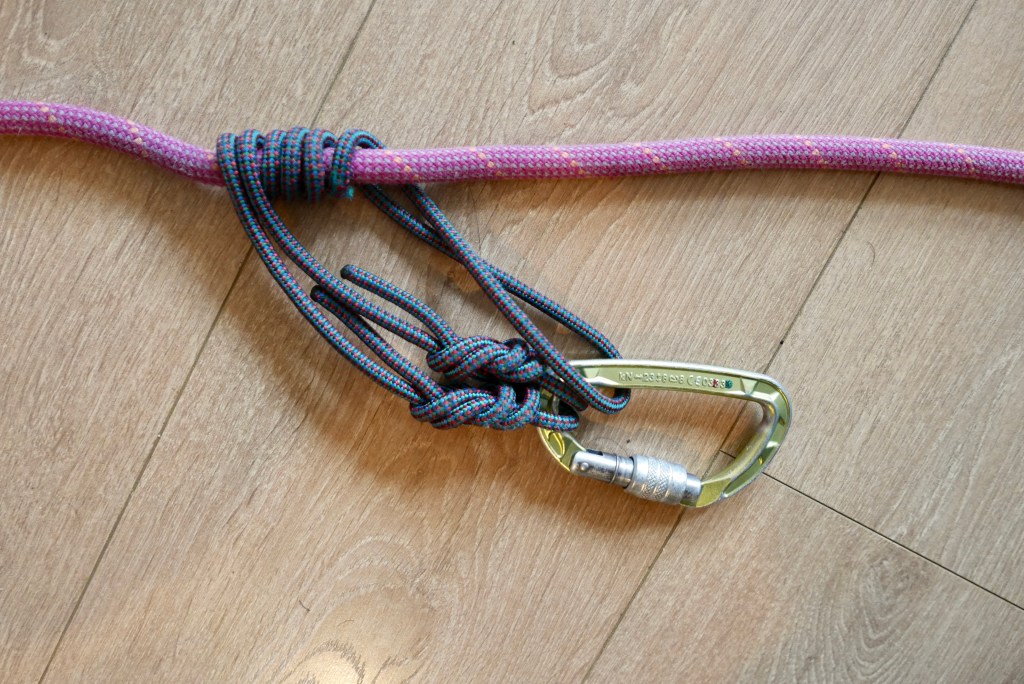
The Modified Autoblock is what I generally use as a rappel backup. It does not grab particularly well, but it provides enough friction for use below an ATC while rappelling. Avoiding grabby rappel backups like the prusik hitch allows you to rappel much more smoothly with less effort. On marginal anchors, smooth rappelling is essential.
Similarly, you can add more or less wraps to adjust friction. The friction is also quite sensitive to hitch cord length.
PMP (Prusik Minding Pulley) Use
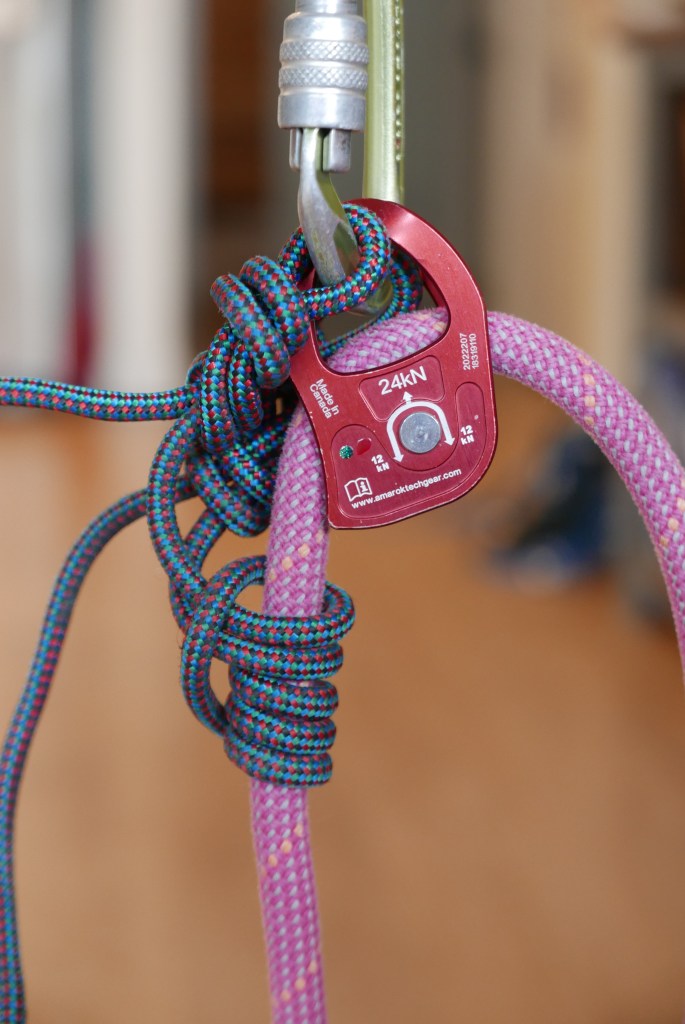
Using a PMP can be useful in many rescue situations. It can replace a progress capture pulley like the petzl micro traxion, and in some cases be more versatile by releasing loads more easily(with the right hitch). I find the schwabisch hitch works very nicely with pulleys.
For efficiency in haul systems you want the hitch to sit as close as possible to the lip on the pulley. If the hitch sits too far away you can either clip the hitch higher up on the anchor or shorten your hitch cord (requires an additional carabiner). If you have a fig-8 eye-to eye cord, it is very easy to untie the ends and make it shorter.
Lastly, be careful about skinny cords in large pulleys, as the hitch can get pulled inside the plates and bind awkwardly up.
 Sandro Summits
Leave a comment