March 31, 2024
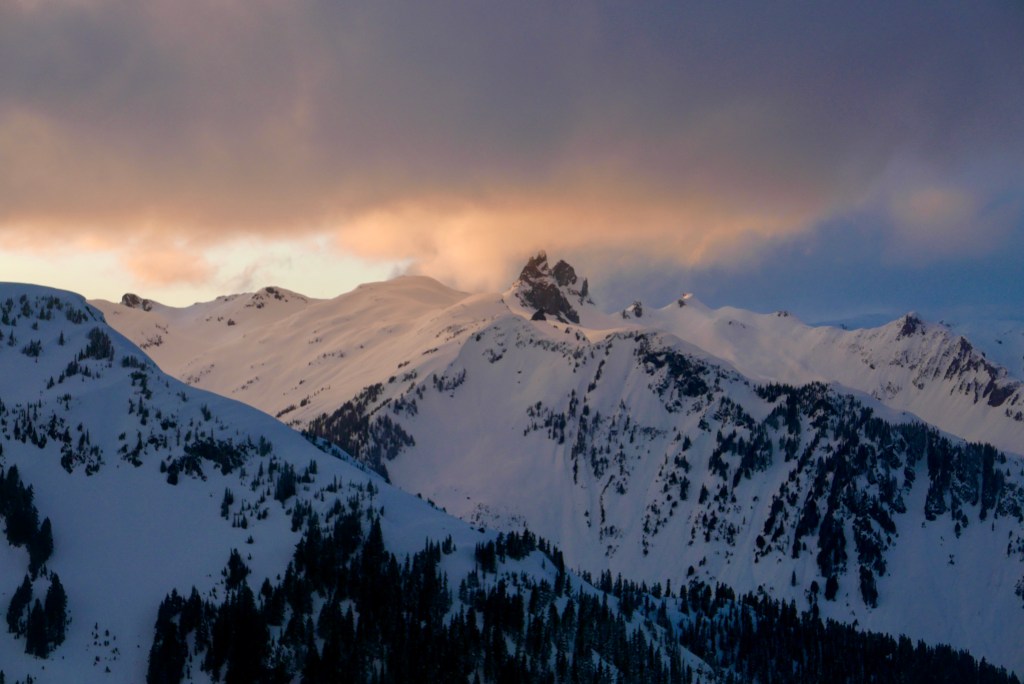
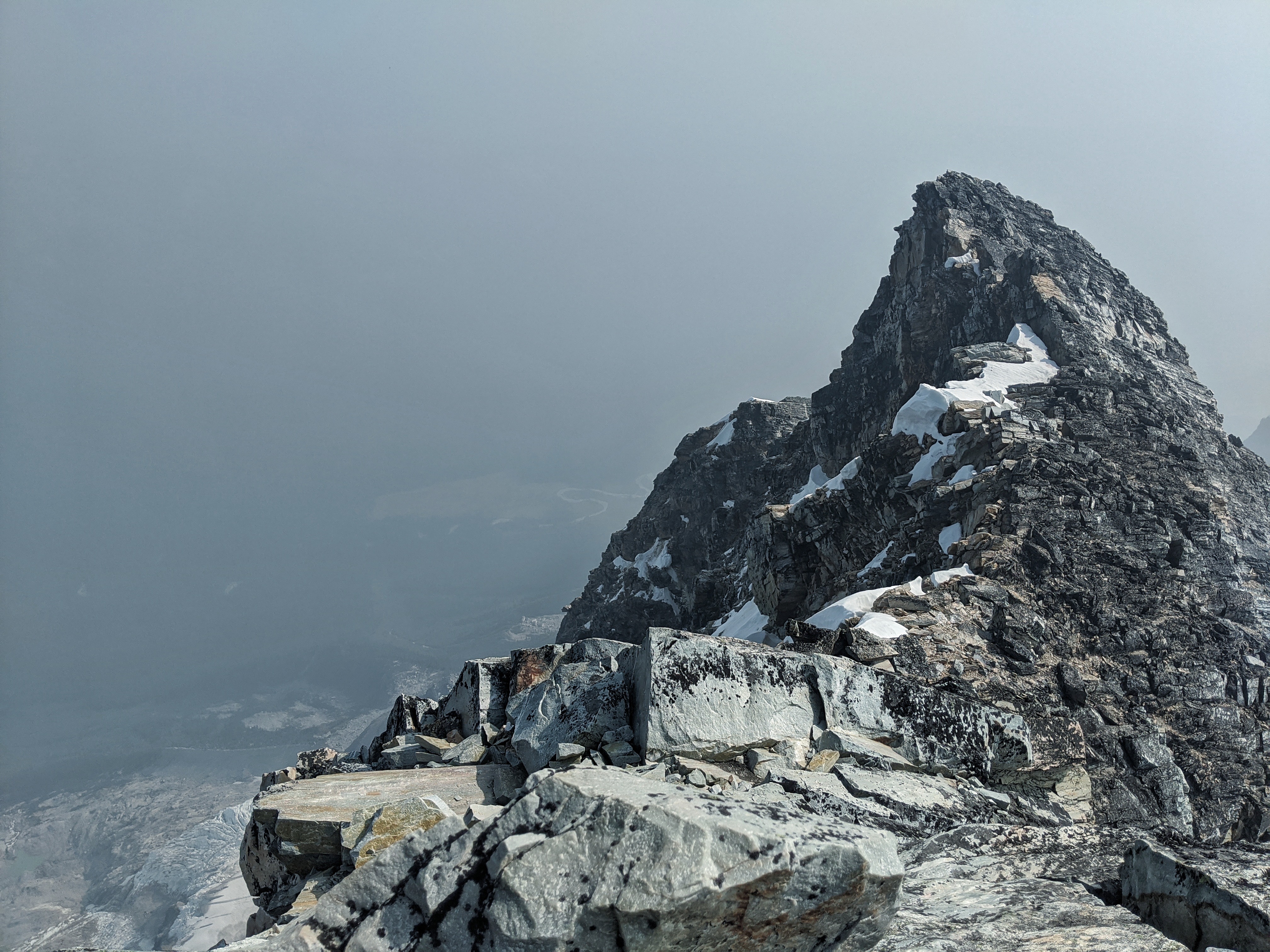
There is something almost sinister about the volcanic towers on the Squamish-Cheakamus Divide. They are strikingly aesthetic, but in a way that would not look out of place in Mordor. Mt. Fee is a staple of the skyline past Squamish, a sharp black spike always standing proud above the surrounding snowfields. Despite being a beautiful peak, both towers see few summits due to a fierce reputation for terrible rock quality. We had our sights set on the South Tower, it stands taller than the North Tower and has mandatory 5th class climbing. This peak had been on my radar for a couple years after being awestruck by it on a ski touring trip to Brew Hut. When Francis had mentioned that he was gearing up for a spring attempt this year, I couldn’t say no. There is very limited information on Mt. Fee’s south tower, I wouldn’t be surprised if it hasn’t seen an ascent in over a decade. We followed the route described in Bruce Fairley’s guidebook. First ascent was 1963 by P. Thompson, M. Wisnicki, and R. Woodsworth.
We drove up Shovelnose FSR as high as we could Saturday evening, after about 800m the snow increased rapidly. The Land Rover spun its tires as the diffs dragged through the dense spring snow. We soon surrendered to the snow, reversing back down to a beautiful lookout at about 800m. It seemed apt to have the intimidating Vulcan’s Thumb (never climbed) looking down on us throughout the night.

After a quick debate on start times, we settled on getting up at 2:30 so we could be down off the west snow slope before the sun cooked it. We quickly settled into bed. I cowboy camped under the stars, falling asleep to the faint but steady beat of rave music echoing up from the valley.
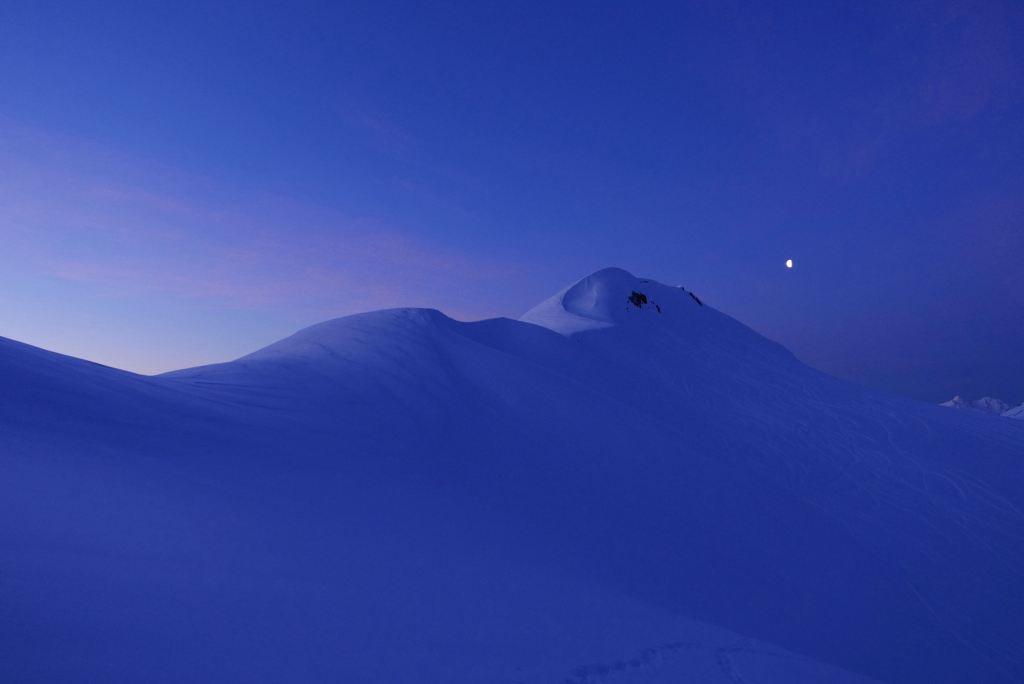
In the morning after a quick instant coffee and snacks, we started hammering up the access road. Francis and Alex set a stiff pace on their snowshoes. I followed through the rutted-up snow on my touring skis. After getting in the alpine, we wrapped below the west face of Shovelnose and over towards Fee. Here the skis came into their own, making travel through powder and avalanche debris easier.

We got to the the base of the steep snow, just as the sun was starting to warm the sky. We stashed our skis and snowshoes, switching to crampons. I also swapped out my ski boots for mountain boots.
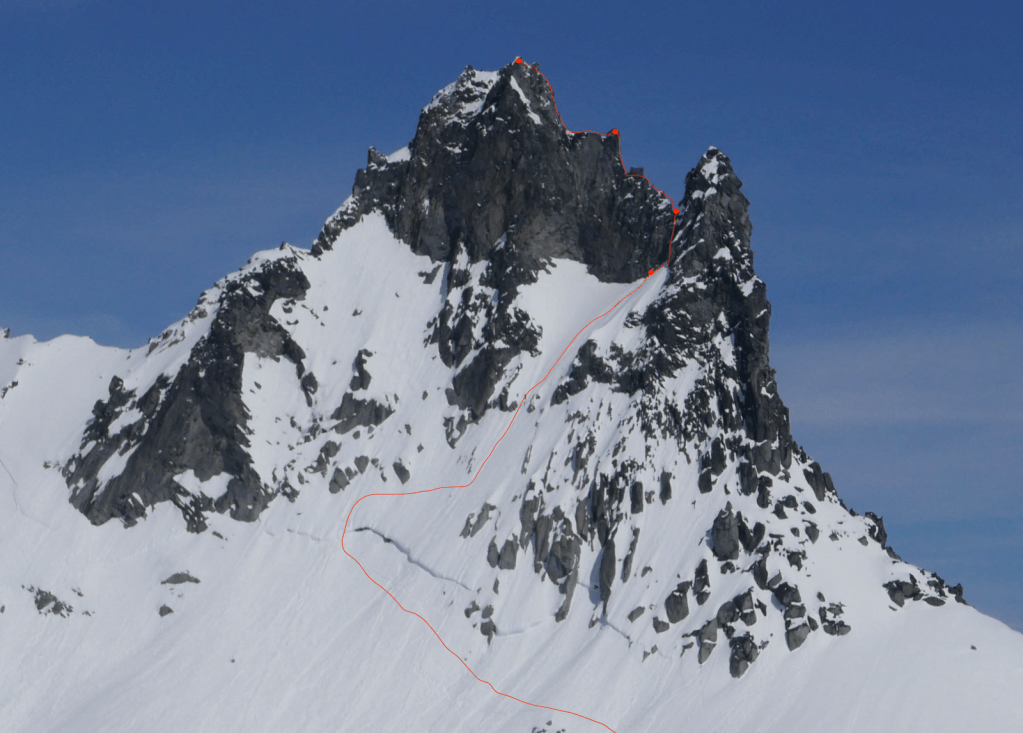
We started up the snow slope, at first wallowing crotch deep in the soft snow. A large old crown line posed as our first obstacle, we traversed climbers left, where it was less prominent. Having two tools felt nice to pull over the bulge. We traversed back right, and through a short runnel before getting to the top of the snow slope.
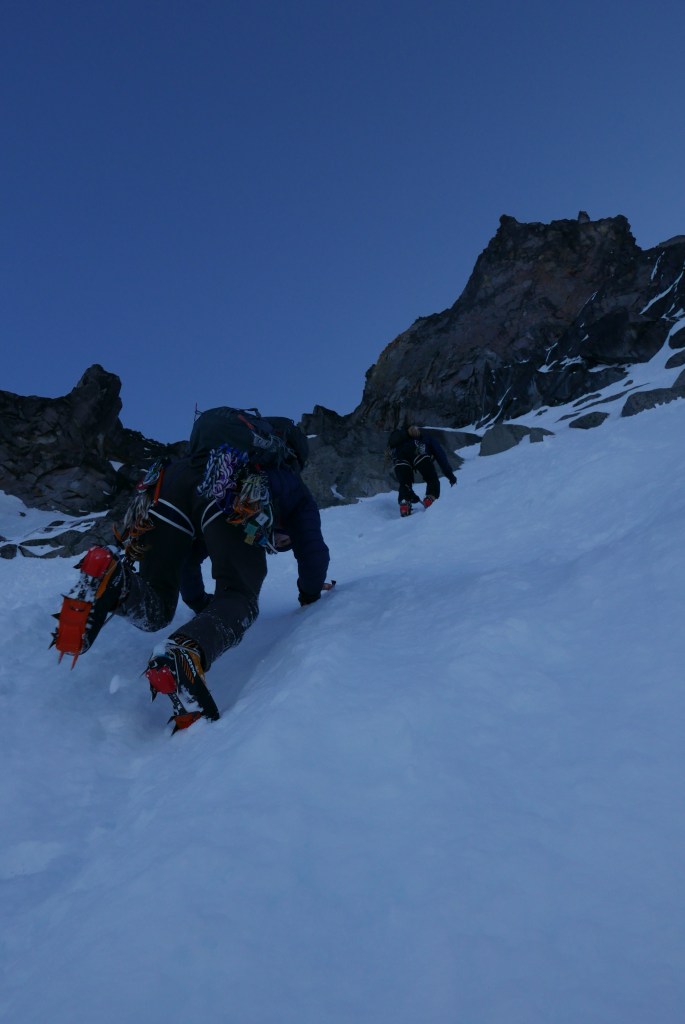
From here we slung a horn as the first belay. Alex headed for the first lead. Cold and snowy, he kept crampons on and used one ice tool to make his way up. Mt Fee started to live up to its reputation of choss as he unavoidably hurled watermelon sized chunks onto the snow below. We had set our belay well to the side to avoid rockfall. Getting to the top of the 10m pitch, Alex made a hanging belay off a block in the notch of the ridge. Francis headed up second, then myself. Having never mixed climbed before, the pitch felt quite stiff. With the somewhat precarious block as our belay, I pulled on a few pieces of gear, not wanting to risk a fall. At the top there was no ledge, so I joined Francis in an awkward au cheval at the belay. I was thoroughly impressed with Alex’s lead.
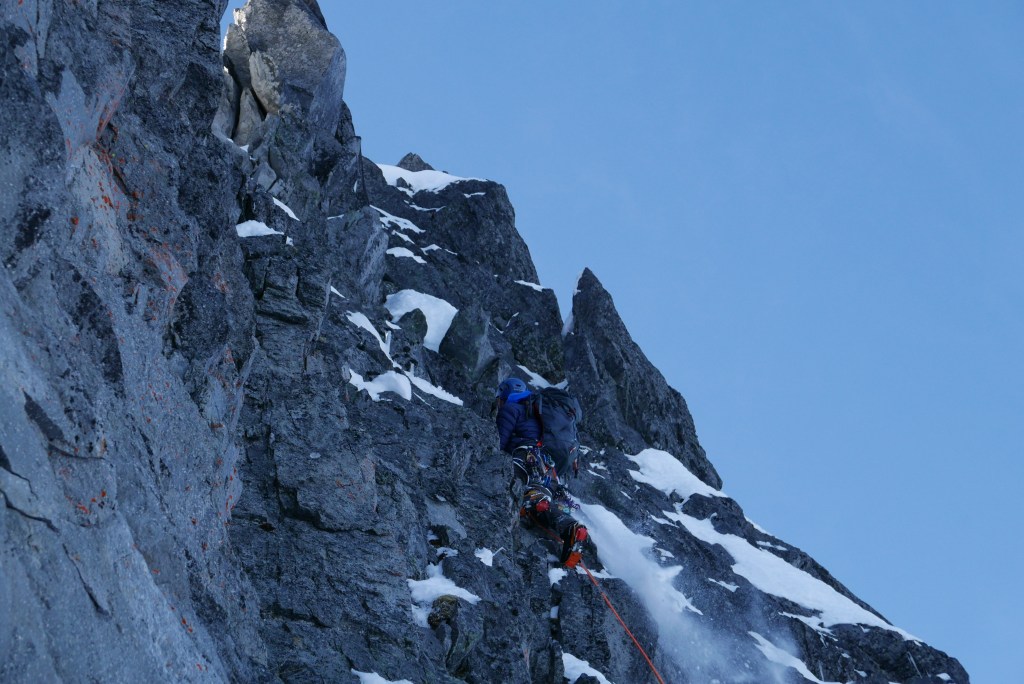
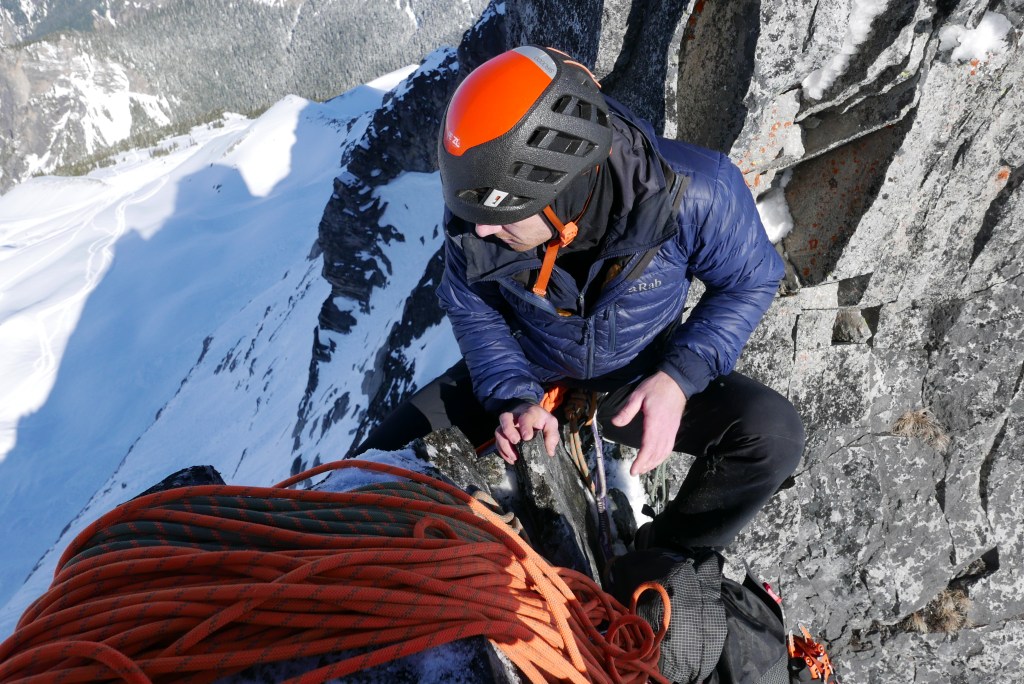
Doffing crampons in an au cheval position was a new challenge that required flexibility and balance. After swapping to rock shoes, Francis took the next lead. Francis continued straddling along the ridge, with spectacular exposure. The large gendarme on the ridge posed as the second technical crux, made awkward by the fact that almost all the good looking holds were just waiting to fall off. Francis nicely picked his way through the Jenga crux and built a belay slinging the top of the gendarme.
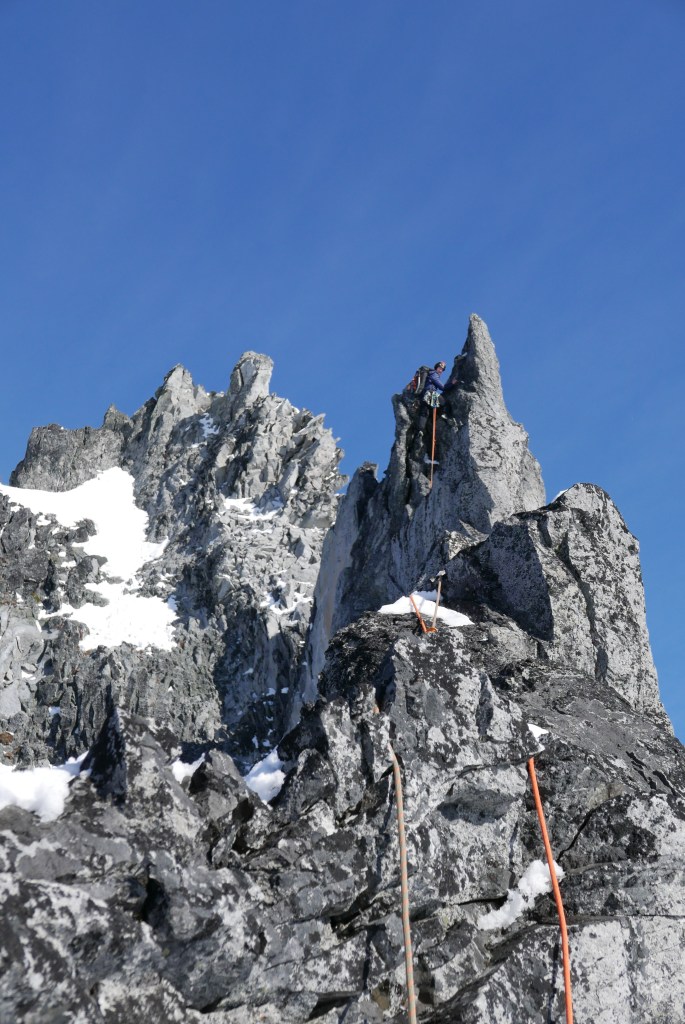
The exposure on the ridge was wild, beyond any other climb I had done in the sea to sky corridor. The rock was better on the ridge crest, but still precarious. I had been on rock worse quality than Fee, but I had never seen such poor quality rock hold in such a spectacularly vertical position. It is undeniably a very dynamic environment. The route could very well be different for the next party.
The final lead was mine. I had kept my mountain boots on, which made for a smooth transition to the snow on the next pitch. Back to the knife edge ridge, I shimmied along the snow while slinging a few blocks at my feet for protection. Heading up, I placed a few cams and tested almost every hand and foot hold. Many wobbled, and some fell off the ridge altogether. All in all, the pitch climbed better than it looked. After standing on the summit, I built another belay slinging another block just shy of the summit itself.
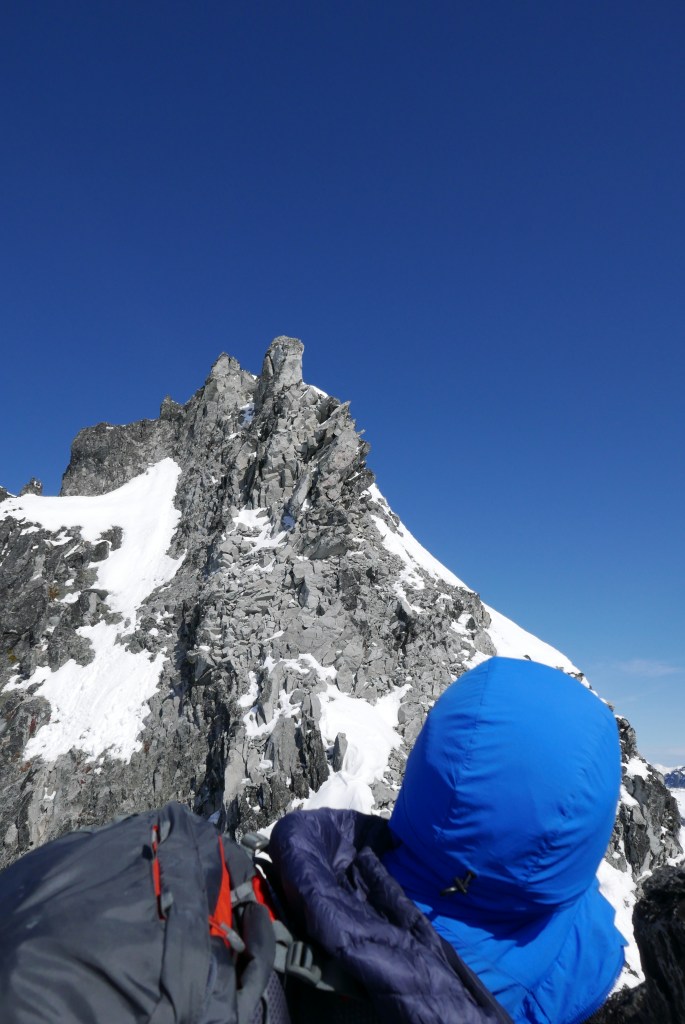
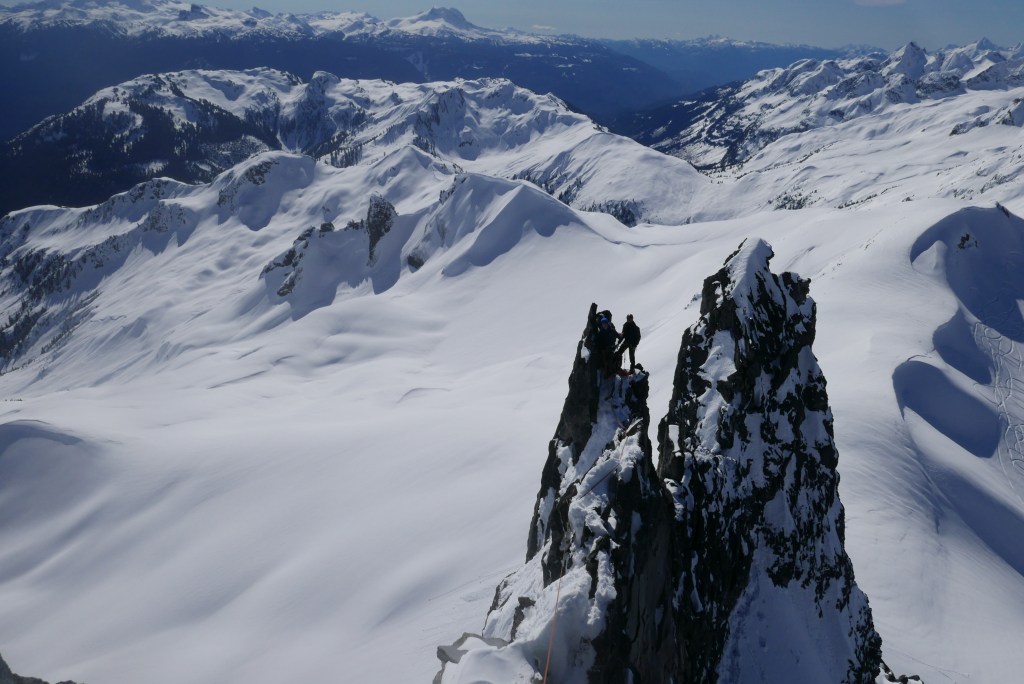
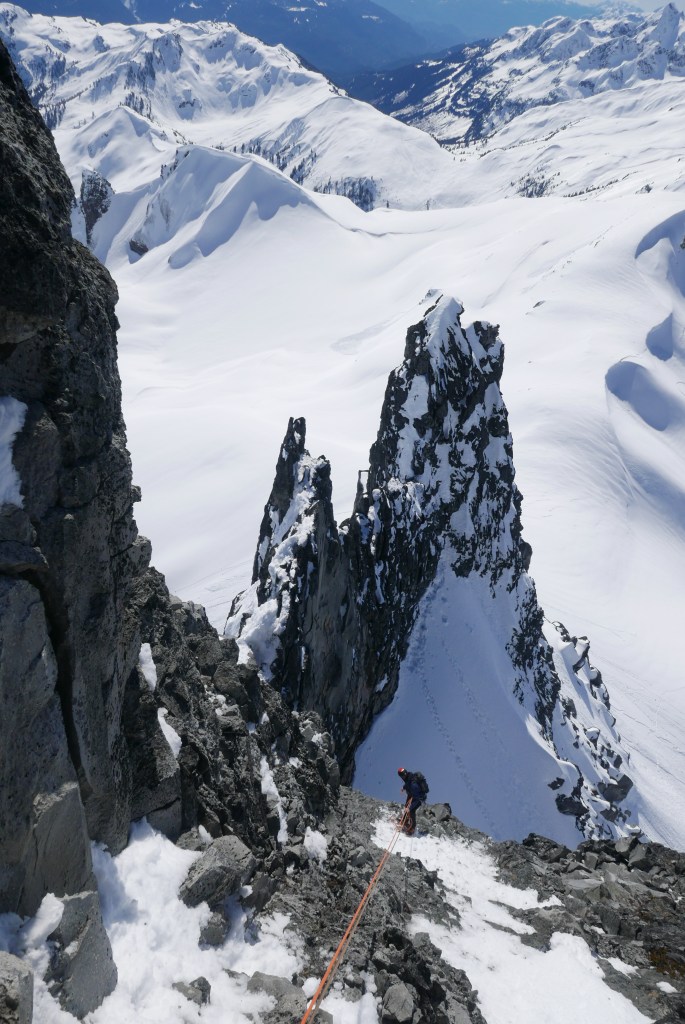
After Alex and Francis summited we quickly set up our rappel. Eager to get off before the warm spring sun cooked the snow slope below us. Our double ropes allowed us to get back to the snow slope in one 60m rappel. We set a second rappel from the same anchor as our first belay station so we could rappel the steepest section of snow. From here we quickly down climbed back to our stashed skis and snowshoes.
We started back to the car, picking a different route that followed the ridge south and dropped off the small col east of Shovelnose. This reduced our avalanche exposure with the rising hazard. I was grateful for my skis as I effortlessly turned down the alpine bowl. Francis and Alex followed, making a surprisingly good pace downhill on snowshoes. I made it back to the car in just under 12 hours. Alex and Francis came a little later, not having the luxury of skiing out the snowy FSR.
Overall it is a spectacular climb. Fee lives up to its sinister presence with the precarious loose blocks. It is made all the more tantalizing by how beautiful the climb and summit is. Climbing it was an amazing experience, but it felt almost like a deal with the devil, and is not one I intend to repeat.
Route Description
3 pitch 5.6 (1963 grade)
Approaching from the West Face, climb the snow slope towards the notch south of the summit. Snow is about 45 degrees at its steepest. Utilizing spring snow allows easier passage over the steep choss slopes. Climb a stiff short 10m pitch to a block at the lowest point in the notch, it is advisable to set your belay offset from rockfall at the bottom of this pitch. At the top of the notch is a block to belay. It is an awkward stance, you can either hang in your harness or straddle the ridge. 2nd pitch, continue au cheval along the ridge, taking caution while climbing up the gendarme. Belay off the top of the gendarme for a 30m pitch. 3rd pitch, continue along the ridge and up loose blocks. There is a horn just south of the summit that I traversed around on the east side. There is a decent block just shy of the summit on the south side to belay off of. Again about 30 m for the 3rd pitch. From here one 60m rappel brings you back onto the snow slope.
 Sandro Summits
Leave a comment